Showing posts with label europe. Show all posts

Wednesday, October 9, 2013

10 Photos of Mirrors and Reflections


I have a fascination with mirrors and reflections— I love the strange perspectives they give to reality. As a kid, one of my favorite road trip activities was staring at the rearview mirror while watching the reflections in the windows in my peripheral vision. If I did it too long, I got dizzy, but I would stare as long as I could. Now that I’m grown up, I still do that. And sometimes I take pictures, too. Sometimes multiple pictures of the same reflection. Don’t judge me. Mirrors are cool.

Self-portrait in Wyoming.

Tucson, Arizona.

Antelope Island, Utah.

Library, Seattle, Washington. It's a whole building made out of mirrors!

A tiny town whose name I cannot remember, Germany.

Same mirror from a different angle.

St. Elisabeth's Church, Nuremberg, Germany.

Building on the side of the highway, St. Peters, Missouri.

More Wyoming.

De Young Museum elevator, San Francisco, California. Also, this is the greatest picture I have ever taken.

Tuesday, March 26, 2013

Travel Tip Tuesdays: How to Avoid Looking Like an American


“How did you blend in when you were in Europe?”

As I’ve said many times, when it comes to European travel, I’m very much an amateur. I was only there six weeks, and most of that time was spent picking beans and berries in Middle of Nowhere, France and Germany. I can’t tell you how to get a good rate on a hotel, the train system still mostly befuddles me, and I never did figure out how to quickly convert euros to dollars in my head. Still, I did pick up a few travel skills along the way, and one of them that made me proud was this: not appearing to be an American.

Some people don’t see the point of this. My best friend, for instance, said that standing out as a foreigner was one of her favorite things about studying abroad and traveling in England. And of course, showing that you’re a traveler is a great conversation starter or way to find help. However, blending in has a lot of advantages. You’re less of a target for pickpockets, you can experience the culture in a more authentic way, and— best of all— when people discover you’re from the USA, you help dismantle the stereotype that all Americans are loud, rude, and self-centered.

I’ve mentioned this topic briefly before, but here are five practical tips to help you blend in, at least in western Europe:

Amsterdam, the Netherlands
1. Don’t dress like a tourist. If you wear a loud shirt and sunglasses, have a huge camera slung around your neck and a cheap souvenir ball cap with “Paris” written on it, you might as well have a sign on your head that says “Rip me off.” Avoid expressly American dress styles, most notably shorts: most Europeans consider shorts to be beachwear. And don’t chew gum.

2. Wear neutral colors. With army-green cargo pants or jeans, a plain shirt, a plain gray jacket, and a fedora or bucket hat, I blended in well enough that people thought I was German, despite my tennis shoes and huge backpack. 

3. Keep your voice low and quiet. On the train from Amberg to Nürnberg, I shared a car with six stereotypical “loud Americans,” who shouted their conversation to each other, laughed riotously, and whined about how stupid and slow the train was. With deep frowns, the Europeans in the car buried their heads in their newspapers. I felt embarrassed on behalf of my entire country. Europeans are generally much more quiet and reserved than Americans, especially in public. It’s only reasonable to respect that.

4. Perfect your accent on, “Hello,” “Thank you” and “Good-bye.” My hosts in the Netherlands thought it was hilarious when a cashier, upon hearing my initial “Hallo,” spoke to me in Dutch. It was one of my favorite things to do in any of the locations. Even though my tourist status was often quickly given away, I enjoyed making a different first impression.

5. Watch the people around you. If no one is smiling, eating with their fingers, speaking loudly, rocking from foot to foot, or looking people in the eye, it might be a cultural norm that you’re unaware of. If you’re observant of the people around you, you can take your cue from their actions and blend in better than you could otherwise. 

~~~

When I was in Salzburg, I was strolling down the street with my full backpack in tow. A young man with a clipboard hailed me and spouted out some sort of obviously-prepared pitch in German. With an apologetic smile, I replied, “Ich spreche kein Deutsch.” 

The petition-seeker was floored, and asked in an unbelieving voice, “You are American?”

“Ja,” I replied. “Sorry.”

His mouth widened into a smile, and he chuckled. “Okay, have a good day!”

“Danke schön!” I said, and moseyed off into the city, blending in once again with the people of the continent I had come to love.

~~~

Friday, January 18, 2013

Five Photos of a 'Merican in Europe


One of my proudest achievements in Europe was getting the locals to think I was one of them. Usually this occurred when I kept my mouth closed (although the cashier at the gift shop in the Kröller-Müller Museum definitely thought I spoke Dutch), and I got good at saying, “Ich spreche kein Deutsch,” trying to hide my proud smile that they hadn’t labeled me as an American right away.

Still, there were times when my American-ity showed pretty blatantly, as you can see in the following photos:

I found this "American sandwich bread" in a tiny corner store in the rural village of Faucogney, France.
"Local cuisine in Salzburg? Nah, I'll just nom on this Clif bar I bought at a Wal-Mart in Missouri."
(Also, I bear an uncanny resemblance to my oldest brother in this picture.)
I'm sure Europeans get on the wrong train sometimes, too. But they wouldn't stay on the wrong train when
the conductor tells them in German to hop off at the next stop and backtrack. That's an American thing.

Okay, so it's a European food. But WHY DON'T WE SPREAD THIS ON EVERYTHING?

This was my face in Europe a lot. I hope some of the people thought it was cute instead of idiotic.

Tuesday, December 4, 2012

Travel Tip Tuesdays: European Travel: Six Beginner's Mistakes to Avoid


“Learn from your mistakes, but if possible, learn from others’ mistakes.”

"Dublin has water fountains, but only in
Terminal 1? CRAZY! Let's take a photo!"
My first (and only) trip to Europe was a haphazard experience, filled with lots of drama, stress, joy, adventure, memories, and goats. It is a trip I will never forget, one that gave me a lot of new perspective and a lot of great stories. However, the trip was much harder than it should have been, and most of that was due to beginners’ mistakes. I will now share them with you, so that all you first-time European travelers will arrive better prepared than I was!

Mistake #1: Not bringing enough water. I soon found out that there are no water fountains in Europe. (Okay, maybe there are a few, but they are few and far between!) Whether stranded in Terminal 2 of the Dublin airport or wandering downtown Hamburg, I found myself dehydrated to the point of delirium more than once. Bring two or more water bottles, and when you find a water source, chug as much as you can. 

Mistake #2: Not carrying any coins. Basically every toilet in Europe requires payment, and they often demand exact change. The moment you get into Europe, buy something small and start accumulating coins as fast as you can.

Mistake #3: Assuming your American credit card will work. Trying to buy my first train ticket, I was informed that my card was invalid. Fortunately I had enough cash, but it completely drained my supply of euros. Always carry enough bills to get you where you need to go, or else leave yourself extra time to find an ATM.

Mistake #4: Not bringing a phrase book. Learn to say both forms of, “Excuse me” (getting someone’s attention and apologizing for bumping into someone), followed by “Do you speak English?” in the native language. And then bring a phrase book for everything else. It’s a horrible thing to be stranded in the middle of Germany with no idea what the words for “ticket counter,” “ATM” and “departing trains” are.

Day one in Europe: jet-lagged Lisa who is, believe it
or not, attempting a smile in front of the Amsterdam
train station. Jet lag makes you feel the way my face
looks in this picture. Be afraid. Be very afraid.
Mistake #5: Not preparing enough for jet lag. I assumed that jet lag would involve me feeling exhausted for a few days and getting hungry at weird hours. Instead, my body went into an all-out revolt, turning me into a drugged-out panic-attack-waiting-to-happen with no appetite and lots of nausea. It took me a solid week before I felt that I had a grasp on reality again. Have all the details worked out for your first week so that you don’t have to worry about thinking on your feet when your brain is back in America. Which brings me to my final point…

Mistake #6: Thinking that planning will stifle your freedom. If you’re a fly-by-the-seat-of-your-pants kind of traveler, as I generally am, you may cringe at the thought of planning an itinerary. Take a deep breath, and then plan, plan, plan. If you want some freedom, give yourself some gaps in your schedule, and/or make sure your reservations are refundable— but for the love of cheesecake, don’t just go where the wind blows you unless, a) you are a hardcore nomad, b) you have unlimited money, or c) you just got engaged right before the trip and suddenly found your whole world flipped upside down and you just couldn’t focus enough to get your act together but still wanted to have the adventure (okay, never mind; the last point gives you no excuse to stress yourself out by not planning). 

The balance to this final point is that even in the craziness of on-the-fly planning, amazing things can happen— such as an incredible unplanned week in the Netherlands. That’s the beauty of travel, and life, and anything worth doing: no matter how many things go wrong, something wonderful can still emerge.

Still, it never hurts to learn from others’ mistakes.

~~~

Wednesday, October 10, 2012

10 Photos of My Engagement Ring in Europe


Almost exactly three months ago, Zachary bought me a rose-gold sapphire ring that I rather like, to put it lightly. I wore it whenever I could in Europe, only taking it off for farm work. I developed a small tan line and a rim of callused skin on my fourth finger that I shall continue to nurture for, well, the rest of my life. 

Everywhere I went, I found myself holding my left hand at arm’s length and snapping a shot of my lovely ring against whatever scenic background happened to be present. Here are my ten best shots, in chronological order.

I always love a good waterfront town, like Hamburg, Germany.
This was my home for two weeks at Laubmüehle, Germany.

The Salzburg Cathedral in Austria was pretty amazing. 

And so was Salzburg Castle…

And so was this Salzburg fountain…

And so were the Alps. Salzburg was pretty darn scenic!

Mountains and my favorite goats at Jean le Moine, France. 

Heather and a wild pony in the Netherlands.

One of Amsterdam's many canals.
And finally, Jan Vermeer's Milkmaid. I still feel awed that I was even in the same room as this painting.

Tuesday, October 9, 2012

Travel Tip Tuesdays: Safety Tips for Travel Abroad


Do you think you could give me some traveling tips, especially on being safe in Europe/abroad?

A friend asked this question last week, and as I was writing my answer to her, I realized that this would be a good blog for anyone who’s thinking of going to Europe. I’ve written about women’s safety and safety in hostels, but here’s the intercontinental version. 

Let me put in a disclaimer that I am very inexperienced when it comes to international travel, so I am by no means an authority. However, I did spend six weeks in Europe solo, and before I even set out, I gleaned a lot of good advice from my friends who have traveled worldwide, everywhere from China to Jordan to Peru. 

That said, here are some tips that were most helpful to me when traveling abroad:

Pictured: appearance of absolute confidence, and German disguise.
(I think it was the hat that cancelled out my American-ness.)
Do your homework before you leave. I felt a bit unprepared going to Europe: study up on Eurail passes, learn that free toilets are not a “thing,” figure out which cities are worth the trip and which are just big tourist traps. Rick Steve’s Europe Through the Back Door was massively useful to me, and there are several other guidebooks to help out as well. If you’re a woman traveling solo, I suggest a delightful (and helpful) book by Beth Whitman called Wanderlust and Lipstick.

Pack light. Fit everything into one backpack. This gives you so much more freedom and mobility, and keeps you from worrying about your luggage stowed at the back of the train. This is a big part of safety: keep your luggage with you, and you won’t have to worry so much.

Look like a local. When you don’t have a giant “I AM AMERICAN” sign hovering around you, you’ll be a lot safer from pickpockets. In Europe, blending in is easier than you think. Even though I wore a huge backpack, walked around in tennis shoes, and had a camera bulging in my pocket, people often approached me speaking in their native language. (I can’t tell you how many social activists in Salzburg tried to get me to sign their petitions until I stuttered out that I didn’t speak German!) Learn the basic dress code (for instance, no shorts, no loud t-shirts), and you’ll blend in a lot better. 

Always seem absolutely confident. Don’t unfold your massive tourist map and look at it confused (that’s how I got guilted into giving a homeless man a euro in Amsterdam). Don’t look around nervously. If someone on the street approaches asking if they can help you, try to gauge their motives. If you’re unsure, babble something in gibberish or simply say “No,” firmly, and walk away. Always walk and carry yourself as if you know exactly where you’re going. 

Practice the same safety you practice at home. I joked (but it was true) that the most dangerous place I visited on my trip was the Greyhound station in St. Louis. There are no special safety rules for traveling in Europe. Keep your wallet close (preferably in a money belt). Don’t walk down deserted alleys at night (well, I am guilty of this one). Don’t make yourself vulnerable, and watch out for pickpockets, which will be a much greater problem than any other kind of crime.

I'm naturally really good at the "a little
 stupid, but strangely endearing" thing.
Be respectful and endearing. People are much likelier to go out of their way to help you if you seem to respect their culture— it makes your ignorance of their language and customs endearing rather than annoying. Whenever I made an (awful) attempt to speak to someone in their native language (“Deutschland ist schön,” I’d say in my terrible American accent), they almost always responded warmly. You’d be shocked at how many Americans never even try to reach out to the people around them.

Follow your intuition. I say this a lot, but it’s because I believe so strongly in it. Your body often knows what’s going on before your mind does. If you have a bad feeling about walking down a perfectly innocent-looking street, don’t walk down the street. If a kindly-looking woman gives you an uneasy vibe, then stay away from her. Never chide yourself for being paranoid. Take calculated risks— after all, that is what travel is all about— but listen to those internal alarm bells. 

In short, be smart, be confident, and listen to that intuition. With just a bit of preparation, you’ll be able to relax and focus on having a great time!


~~~

Thursday, October 4, 2012

Travel Stories: On a Train in Germany

Trains are good for taking "artistic shots" like this one.


Clutching my backpack in front of me, I jostled down the train aisle, murmuring “Entschuldigung” to everyone I bumped into. The train from Amberg toward Nürnberg, my transfer point, was crowded with people. At last I plopped down next to a middle-aged woman with glasses perched gracefully on her nose. We exchanged a brief “Hallo,” and then turned out attention to our reading material.

About ten minutes later, I decided that I wanted to check the train’s arrival time in Nürnberg. The only problem was, my ticket was stuffed down into my tight pocket (I was always paranoid about losing them). I laboriously shoved my hand into my pocket, squirming to grasp the ticket and pull it out. At last I ripped it out of my pocket, unfolded it, checked the time, and crammed it (again with difficulty) all the way back into my pocket.

At that moment, the woman next to me said something in German. I looked at her, but before I could blurt out the phrase I knew best (“Ich spreche kein Deutch”), she pantomimed what she was talking about. The train conductor was at the row behind us, asking for tickets.

I looked at the conductor, then back at my pocket, and I giggled. The woman chortled. I plunged my hand in my pocket again, wrestled out the ticket, and got it stamped. The woman and I shared another quick chuckle, and I settled back in my seat. 

“Where are you from?” she asked in a thick accent.

“U.S.A.,” I replied, and she nodded as if that explained everything. Some things are just funny, no matter where you’re from. 

~~~

Friday, September 21, 2012

Where to Go: The Van Gogh Museum, Amsterdam

Landscape at Twilight, 1890

After I stumbled out of the Rijksmuseum, dizzied and saturated by Dutch art, I wandered down the streets in search of a park where I could eat a Clif bar and recover from the amazingness. I almost made it past the Van Gogh Museum. Almost. Then I saw a building to my left with floor-to-ceiling windows emblazoned with copies of Sunflowers and Wheatfield with Crows, and I stumbled to a halt in front of the Van Gogh Museum. I didn’t mean to go here. I stubbornly walked past it and sat in the park and ate a Clif bar. But it wasn’t long before my feet strayed back to the same place, and I found myself pulling euro-bills out of my pocket and heading for the entrance. I just can’t stay away from Van Gogh.

Why you should go: As the name suggests, this is not a museum where you go to get a sweeping view of many different styles. The displays are mostly Van Gogh (surprise surprise), but there are also some features of artists who influenced him. Van Gogh’s paintings are much better in real life than they are in books. If you appreciate his work and want to see some of his most famous pieces, this is the place for you. 

The Potato Eaters, 1885
How to get there: The Van Gogh Museum is close to the Rijksmuseum and easily accessible by pretty much anywhere in the city. (Googlemaps will help you get around town.)

What to bring: The museum costs 14,00 euros. Cameras aren’t allowed, so be prepared to either write down the names of the paintings you like (as I did), or else bring money to buy postcards of the paintings you particularly want to remember.

What to do: Before you head to the displays, take the escalator downstairs and watch the 20-minute documentary about Van Gogh’s life. It’s spoken in Dutch but has English subtitles. Then go on to the displays, which chronicle Van Gogh’s work in his short life as a painter.

What else you need to know: Not all of the paintings have commentary, so it might be worth it to spend an extra five euros to get the audio tour (available in English). There is only one floor of Van Gogh displays, so I actually went through them twice: once up close, observing his technique, and once about six feet away from each painting, appreciating the way they change from a mass of thick paint to a breathtaking view of pear trees at sunset. You might find a new favorite.

The verdict? I’m glad that I visited. If I had it to do again, I would take a longer break in between the two museums in order to recharge my brain. Featuring some of the most innovative and famous paintings in the world, the Van Gogh Museum is definitely worth the price.

The Bedroom, 1888


~~~

Thursday, September 20, 2012

Where to Go: The Rijksmuseum, Amsterdam

This painting is huge. I had no idea how big it was.
Jan Vermeer created fewer than forty paintings
in his lifetime. This is one of them.

I spent my final day in Europe fawning over Amsterdam’s museums. Tomorrow I’ll tell you about the Van Gogh museum, but first, you need to know about the Rijksmuseum (rhymes with “bikes museum”). The museum is under construction right now, so they consolidated their most famous pieces into a single wing. This wing alone is worth every last euro-cent of the admission price. The short story? If you’re ever within a hundred kilometers of this place, go.

Why you should go: It’s a history, culture, and art museum rolled into one. It features famous paintings such as Nightwatch and showcases some of the best artists in the history of the world. 

How to get there: The Rijksmuseum is close to the city center of Amsterdam; I just walked there from my hostel. The city also has a good public transportation system, easily accessible via Googlemaps.

What to bring: The museum costs 14,00 euros. If you want to take time to appreciate each painting, wear insoles— you’ll need them! Cameras are permitted, so if you want to take blurry photos, bring one and turn off the flash beforehand.

That's Nightwatch behind me!
Really it is!
What to do: The wing is set up in chronological order, with different rooms dedicated to different aspects. There is a whole room devoted to china, another to dollhouses, another to Rembrandt and his pupils. Plaques on the walls (written in English as well as Dutch) explain the time period of each room’s pieces, so there is a lot to absorb and learn even if you know nothing about art.

What else you need to know: If you visit while the museum is still under construction (until 2013), you’ll have time to look at every single painting. (If you visit after the whole museum reopens, then definitely do some research beforehand to figure out what you most want to see.) Almost every painting is accompanied by a plaque in English to help you understand the historical/cultural background, interpret the symbolism, and appreciate the technique. This is a must-see for anyone who enjoys art. Spend a few hours— you’ll be glad you did.


Outside the Rijksmuseum. I'm actually glad I didn't have to be overwhelmed with the whole museum.


~~~

Monday, September 17, 2012

10 Photos of Cute Animals I Saw in Europe


I spent the majority of my time overseas in rural Europe, so I saw a lot of animals. From the red deer fawn grazing by the train tracks, to the bunnies the size of groundhogs nibbling clover near the cornfields, animals abound. I didn’t get many photos of the wild ones, but here are some that I encountered personally.

This dog snarled and barked at me nonstop until I sat down. Then I guess I was okay. (Eerbeek, Netherlands)

It's a baby horse! (Countryside near Tasdorf, Germany)

For some reason, I found these Austrian cows to be unreasonably cute. I just want to hug them. (Near Salzburg, Austria)

Some of the many bunnies at this house. (Tasdorf, Germany)

This duck always looked bedraggled and unhappy, which was kind of adorable. (Jean le Moine, France)
Kaya loves her tennis ball! (Eerbeek, Netherlands)

I posted this picture before, but… good grief, look at this cute goat! (Jean le Moine, France)

Doggie in its bed. (Near Eerbeek, Netherlands.)

This excellent pony pulled our cart! (Near Eerbeek, Netherlands)

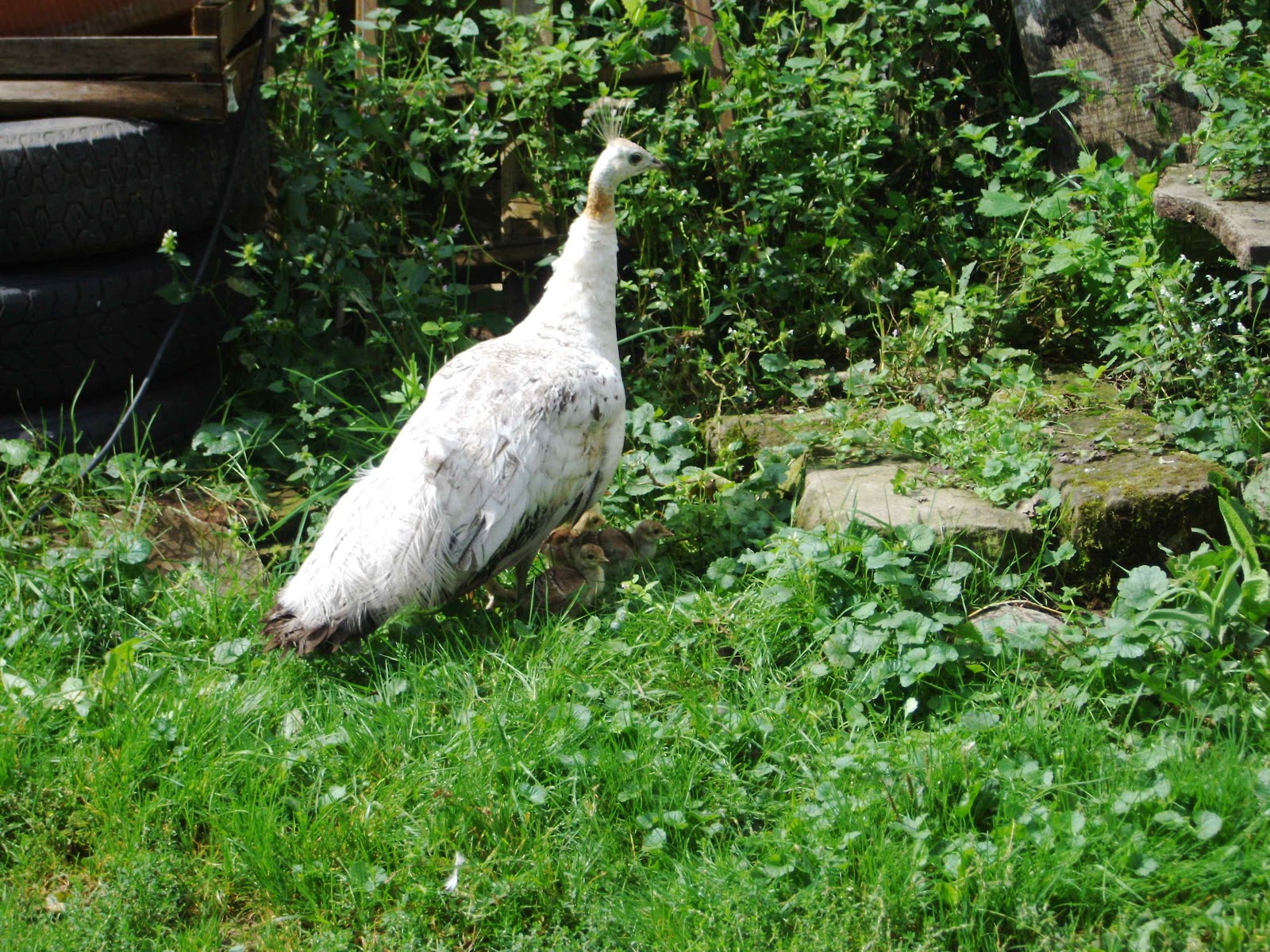
One more time, folks… BABY PEACOCKS!


Thursday, September 13, 2012

Europe, in Conclusion: Thank You, John Lennon


Two nights into my trip, I laid on a hostel bed in Hamburg, Germany, and sobbed into my pillow until I realized that I was having an allergic reaction to the fabric. It had been a stressful day of train delays, miscommunication, jet-lag-induced disorientation, and finally a flu that left me cowering in the hostel bathroom wanting to die. It was the first, but certainly not the last, time that I asked myself (mentally screaming to the heavens with arms outstretched), “What on earth am I doing here?” 

The rest of the world loses its luster when the man you’re going to marry in two months is four thousand miles away. I couldn’t have the sorrowful satisfaction of blaming him; of course it was my fault for deciding to take the trip, my decision to continue with my plans, my yearning for one last solo trip that brought me here. No one to blame but me.

The next day, I hopped a train from Hamburg to Neumunster, where Uncle Steve was going to pick me up. I forced myself to eat a Clif bar, then plugged in my headphones and leaned my head against the window and stared out in a daze at the old buildings rolling by. Why am I here? I kept asking myself. Why on earth did I come here?

I was listening to Love, a Beatles remix album created for the Cirque de Soleil show. This lulled me into a place of dull consciousness, where everything looked close and far away, and my insides felt empty and my head felt detached from my body. (Jet lag is awful.) The last song on the album is All You Need Is Love. Of course, I’ve heard the song a hundred times. But this time, a single line hit me, a gong-note of pure clarity when all the rest of the world was a blur.

There’s nowhere you can be that isn’t where you’re meant to be.

This line echoed in the back of my thoughts for the entire rest of the trip. I don’t know where John Lennon’s head was when he wrote the song, and I doubt that he believed in the concept of providence. But the words struck right to the middle of the thorn that pierces my heart. It was useless to think what I should be doing or rather be doing or might have been doing. I was here, now, in Europe, jet-lagged and homesick and lonely and scared, and that meant that this moment, this place in time, was where I was meant to be. God’s plan always works out, and I am part of that plan.

Thanks to John Lennon, God showed me that everything was going to be okay.

It wasn’t the last time that I felt homesick or stressed out or ill. But every time I get worried or miss Zachary or wish I was going home sooner, I stopped to think of the words. I learned to accept what was happening and enjoy it for what it was. Getting sick in Salzburg was the last time that I felt like I wanted to be home instead of Europe. After that, I floated along in the moment. I embraced the homesickness but enjoyed what I was experiencing at that time. I didn’t wish to be anywhere than where I was right now, because it was useless to do so. And the last three weeks were incredible in so many ways.

By the end of my trip, I looked back on everything— even the first couple of horrible jet-lagged days— with a warm glow. The trip had been stressful, a little traumatizing at points, but ultimately satisfying. I spent six weeks in Europe, navigating trains, figuring out logistics, avoiding pickpockets, speaking broken German and Dutch and French, meeting people, connecting with people, gaining new perspective on culture, beholding the beauty in nature and in architecture, and all this by myself (with a lot of help from my new friends).

Then I returned home, content with the time I had been away, and content with the time I now have at home. The new chapter of my life is opening, and I couldn’t be more excited.

Time to spend the rest of my life with this man. I think my smile says it all.
~~~